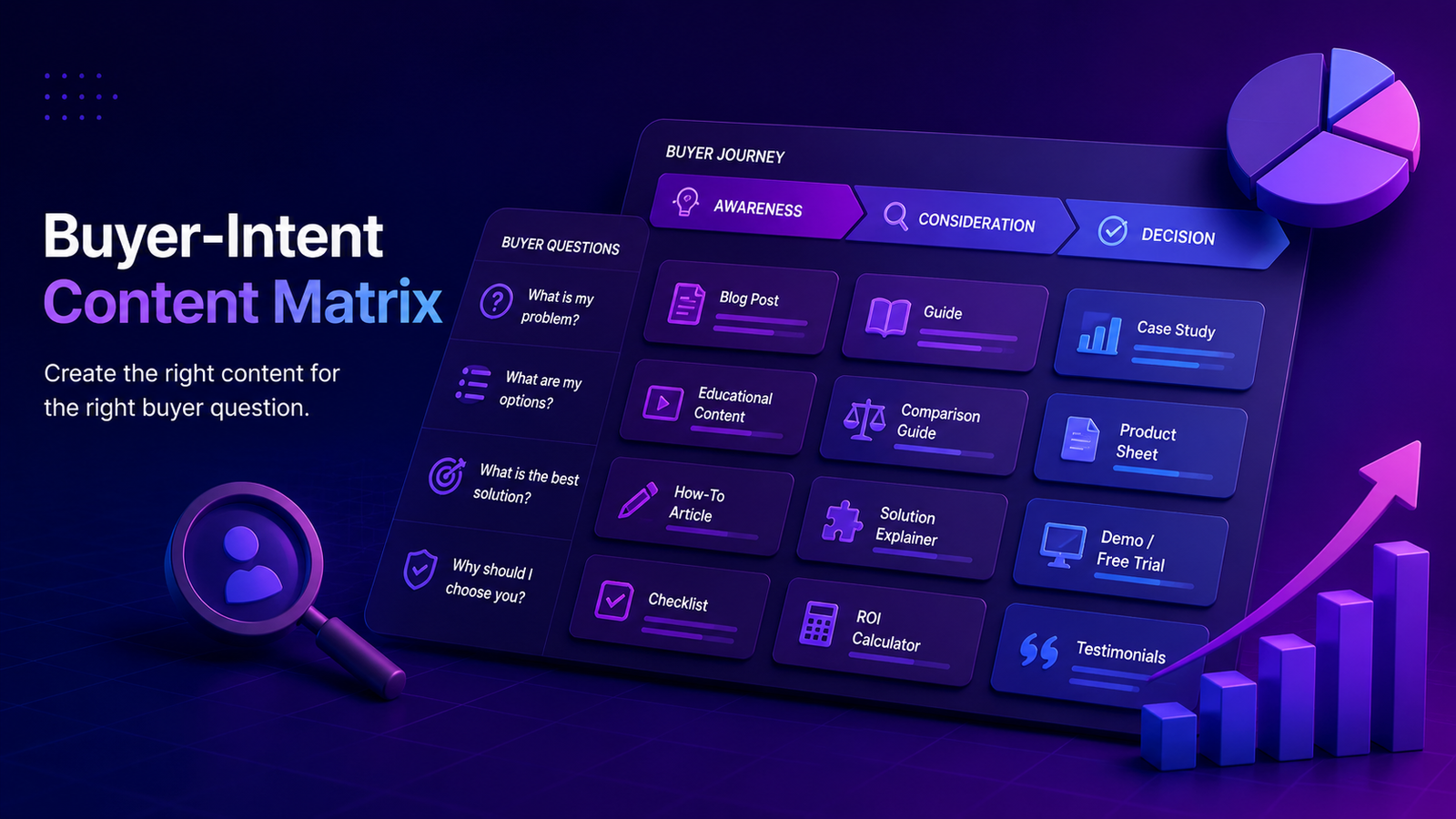
Most content calendars organize ideas by channel or format. Stronger content systems organize ideas by buyer intent. A blog post, landing page, video, or guide only creates business value when it helps move the audience closer to a decision.
Many companies publish consistently but still struggle to generate qualified pipeline because their content attracts curiosity instead of commercial intent. Traffic alone is not the goal. The real objective is to create content that aligns with the questions buyers ask before purchasing.
The buyer-intent matrix helps structure content around two important dimensions: how aware the buyer is of the problem, and how close they are to making a decision. Different stages require different types of information, proof, and calls-to-action.
Four useful content zones
High-performing content libraries usually contain a balanced mix of educational, comparison, trust-building, and implementation-focused assets. Each category serves a different purpose inside the buyer journey.
- Problem education for buyers who feel pain but lack language.
- Solution comparison for buyers evaluating approaches.
- Vendor proof for buyers building confidence.
- Implementation content for buyers reducing perceived risk.
- Decision-stage content tied directly to offers and outcomes.
Educational content creates awareness, but commercial content creates pipeline. Companies that scale organic acquisition successfully understand how to connect both instead of treating SEO and conversion separately.
Use conversion paths by intent
Low-intent articles should guide users toward lightweight next steps such as newsletter subscriptions, templates, or checklists. High-intent pages should connect visitors directly to demos, audits, consultations, calculators, or product conversations.
The biggest mistake most blogs make is creating content with no clear progression path. Readers consume the information and leave because the article never tells them what logical step comes next.
Every article should support a broader content journey. Even informational pages can strengthen internal linking, authority building, lead generation, or product discovery when structured intentionally.
Audit your current library
A content audit becomes far more valuable when articles are categorized by intent instead of only topic. This makes it easier to identify gaps, overlaps, and opportunities inside the funnel.
Review your existing library and tag each article by buyer stage, target persona, search intent, conversion goal, and last meaningful interaction generated. Some pages deserve expansion, some need stronger CTAs, and others should be merged into higher-value pillar assets.
The strongest content programs are not built by publishing endlessly. They are built by creating systems where every article contributes to authority, trust, and measurable business outcomes over time.