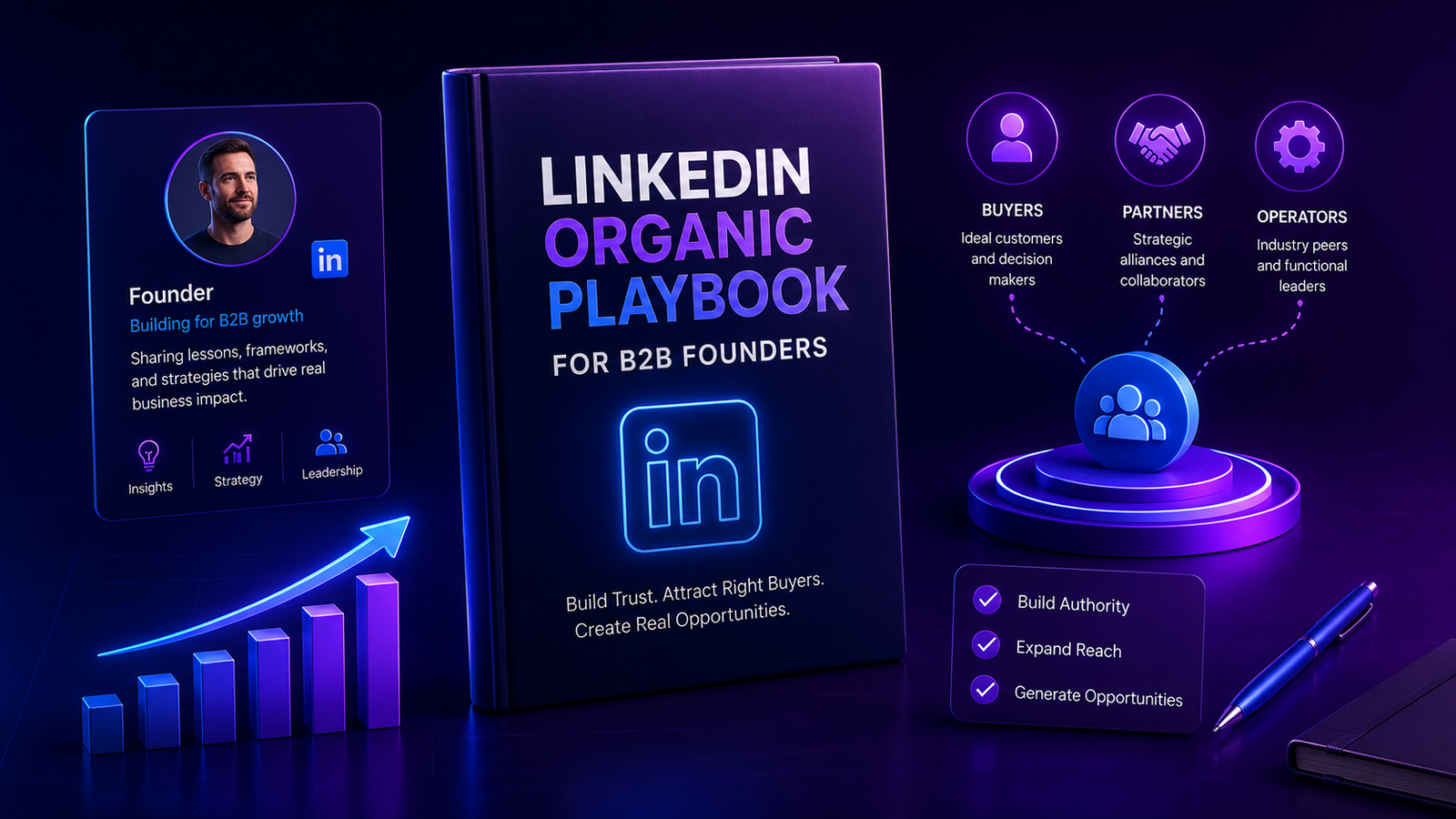
The strongest LinkedIn programs are built around a founder’s lived point of view, not recycled “thought leadership” templates. Audiences engage with opinions, practical lessons, industry observations, and execution stories that feel real. The goal is not to post more often than everyone else — it is to create recognizable expertise that compounds over time.
Founder-led content performs differently from traditional brand content because it carries perspective, experience, and credibility that audiences can immediately recognize. On LinkedIn, buyers are not only evaluating services — they are evaluating the people behind the company. Consistent organic content helps founders build familiarity, trust, and authority long before a sales conversation begins.
The strongest LinkedIn programs are built around a founder’s lived point of view, not recycled “thought leadership” templates. Audiences engage with opinions, practical lessons, industry observations, and execution stories that feel real. The goal is not to post more often than everyone else — it is to create recognizable expertise that compounds over time.
Choose repeatable content lanes
Most founders struggle with LinkedIn because they constantly search for new ideas instead of building repeatable content themes. Strong organic programs usually revolve around a few reliable lanes that can continuously generate insights, stories, and conversations.
- Customer problems the founder sees every week.
- Market beliefs the company is willing to defend.
- Behind-the-scenes lessons from building the product or service.
- Practical advice that creates trust before a sales call.
- Industry mistakes, myths, or outdated strategies worth challenging.
When audiences repeatedly associate your content with specific expertise, trust compounds faster. Over time, these content lanes become part of your positioning and help shape how buyers describe your company internally.
Use hooks that name tension
Good hooks do not rely on clickbait. They identify a real frustration, contradiction, missed opportunity, or shift happening inside the market. People stop scrolling when content reflects a problem they already feel but have not clearly articulated themselves.
Instead of generic introductions, strong LinkedIn posts usually begin with a clear observation, a strong opinion, or a surprising insight that immediately creates curiosity. Specificity consistently outperforms vague motivational content.
The best-performing founder accounts also understand that engagement is part of the content strategy itself. Thoughtful replies, additional insights, and active discussion often extend the lifespan of a post far beyond the initial publish window.
Create the loop
LinkedIn growth is rarely driven by isolated viral posts. Momentum comes from building a repeatable publishing loop that continuously generates ideas from customer conversations, sales calls, audience questions, and industry trends.
Publish consistently, engage in adjacent conversations, save recurring buyer questions, and turn those insights into future content. Over time, the founder account becomes a searchable library of expertise that supports brand awareness, recruiting, partnerships, and pipeline generation simultaneously.
The companies that win organically on LinkedIn are usually not the loudest. They are the most consistent, recognizable, and useful to the exact audience they want to attract.